Choose property

Dead Sea
Please choose a property

Date of arrival

Date of departure

Guests

Room 1

2 Adults
0 Kids

Insert promo code

change a reservation

Where Will We Travel?

איפה נטייל?

אזור ים המלח מציע מגוון עצום של אטרקציות בים המלח, מסלולי טיול והליכה נפלאים,ניתן למצוא מסלולי משפחות,מסלולי אתגר,מסלולים רכובים ועוד ועוד.
עין פשחה, נחל דרגה, קומראן ואפילו נחלי עין גדי, כולם ממתינים לכם. אז הכינו כובע,מים וקדימה לדרך…

אנו מציעים לכם מספר מסלולים מומלצים שאנחנו אוהבים במיוחד, ים המלח מציע עוד שפע אדיר של מסלולים אטרקציות וחוויות, מומלץ להתעדכן באתר רשות שמורות הטבע לפני היציאה. טיול מהנה!

*כל האמור במסלולים הינו בגדר המלצה בלבד, כל העושה שימוש בהמלצה זו עושה זאת על דעתו ואחריותו בלבד,כפר הנופש אינו אחראית לתוצאות

עינות-צוקים

Einot Tzukim (Ein Feshkha)

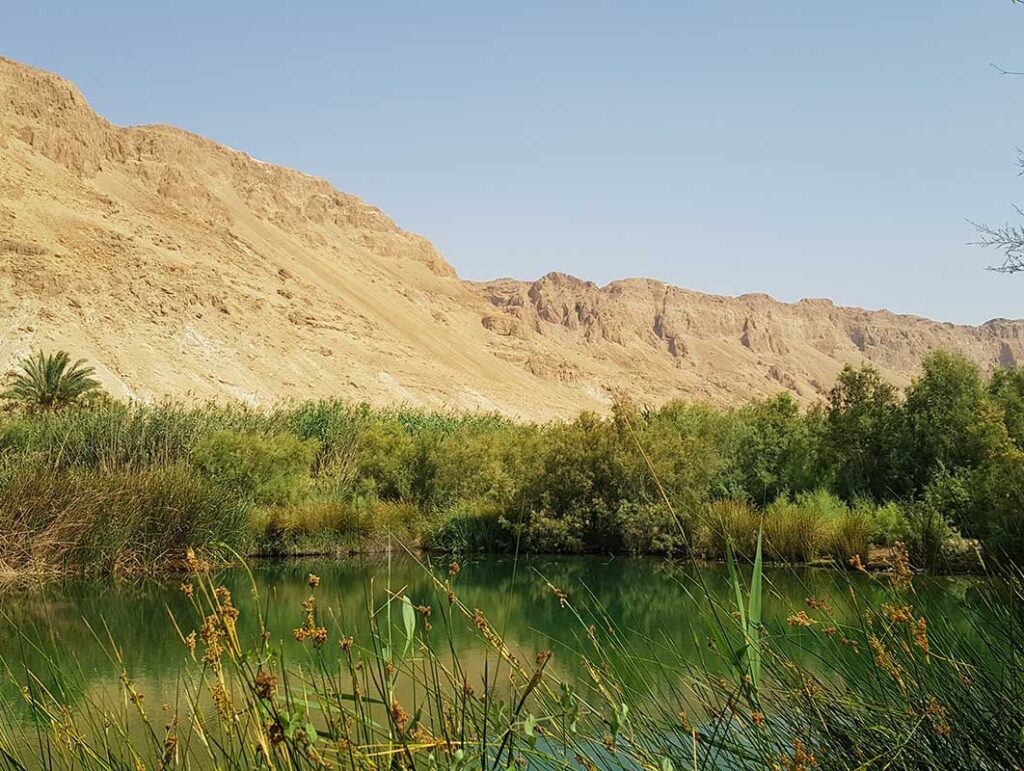
If you’re looking for a proper desert “how is this real?” moment, this is it!  Tucked beneath the dramatic cliffs above the Dead Sea, these springs form one of Israel’s largest and most distinctive desert oases — a ribbon of fresh water in a landscape that feels almost lunar.

Highlights

  • A cluster of spring-fed pools and streams, set in lush reeds and salt-loving plants
  • The “lowest nature reserve in the world” (yes, really)
  • Three main spring areas: Einot Tzukim, Einot Qumran and Einot Tanur

Three Zones, Three Vibes

  • Central area (paid entry): marked walking trails and designated bathing pools
  • Southern area (“Hidden Reserve”): guided tours only, by prior arrangement
  • Northern area: closed to protect sensitive spring habitats

Wildlife & Nature

Einot Tzukim’s landscape is a lush tangle of tamarisk, trickling streams and reed beds, edged with salt-loving plants built for the area’s ever-shifting salinity. In the pools you’ll find species such as the Dead Sea toothcarp and Jordan tilapia — considered one of the most genetically “pure” fish populations in Israel. Peer into the tamarisk and you may spot one of the reserve’s hidden highlights: a rare colony of local weaver ants. They’ve lost much of their habitat at Ein Gedi and now depend mainly on Einot Tzukim. Keep looking beyond the waterline, too — the wider reserve is home to ibex, jackals, wolves and even the occasional hyena.

A Step Back in Time

Hidden among the landscape are intriguing archaeological remains, including ancient structures possibly linked to the extraction of balsam oil. At the southern edge sits Metzad Mazin, with an ancient boat mooring. Some even associate the area with the “Ein Eglaim” mentioned in Ezekiel’s vision of healing waters.

Opening Hours & Visitor Facilities (subject to change)

  • Open year-round (entry fee applies)
  • On-site: organised parking, marked walking trails, toilets and drinking water
  • October–March: 08:00–16:00
  • April–September: 08:00–17:00
  • Fridays & Holiday Eves: closes one hour earlier
  • Last Entry: one hour before closing

Bathing is allowed in the central pools. The southern section is open to guided tours only (pre-booking required).

Lower Nahal Og (Wadi Og)

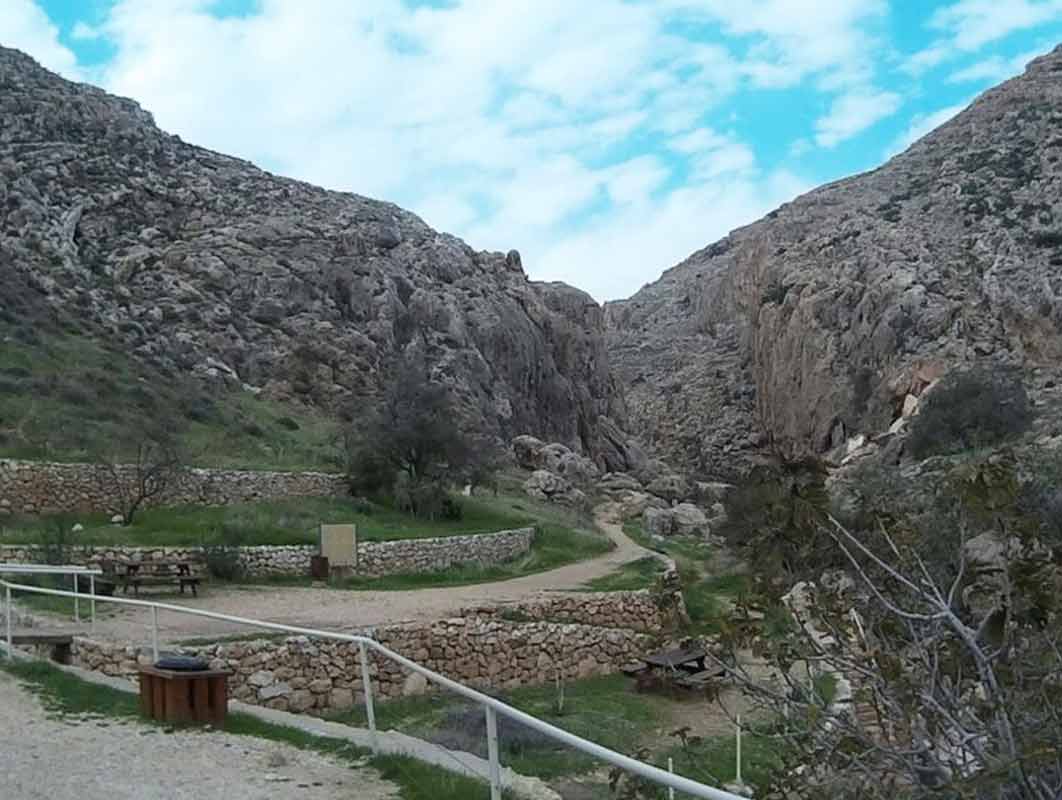
Nahal Og (Wadi al-Mikhlaq) is one of the Judean Desert’s real standouts. It runs west to east, slicing the landscape into two beautiful and dramatic deep canyons before reaching the Dead Sea escarpment. Expect soaring rock walls, pockets of hardy desert greenery, rain-fed seasonal pools, and the haunting remains of an ancient monastery carved into the rock. 

What to Expect

This is for those who prefer an adrenaline-infused yet comfortable hike with a few added ”whoa” moments!

  • Three rocky waterfalls to climb using ladders and metal rungs
  • A tight slot canyon where the walls tower above you
  • A final viewpoint over the Jericho Valley and the Moab Mountains

Route Snapshot

  • Start/Finish: large car park, approximately 100 metres after the entrance gate to Kibbutz Almog
  • Easy walking overall, which includes three climbs (the first is approx. 8 metres, the next two are slightly lower)
  • At the end of the canyon, the path opens out: follow the black-marked trail up a short, steep ascent, then turn right onto the blue-marked trail, which loops back towards Kibbutz Almog
  • After roughly 600 metres, take the short turn-off to Og viewpoint, then follow the trail back to the entrance path and descend to the car park

Recommended For

Active, adventurous families, confident walkers, and adults with a sense of adventure without ropes or technical equipment. Not suitable for pushchairs, and not ideal if ladders are a no-go.

Safety Essentials

  • Do not enter the wadi if there’s any risk of flash flooding
  • Follow trail signage at junctions
  • Closed-toe shoes, water, and a hat are non-negotiable

The Scrolls Trail (Shvil HaMegillot)

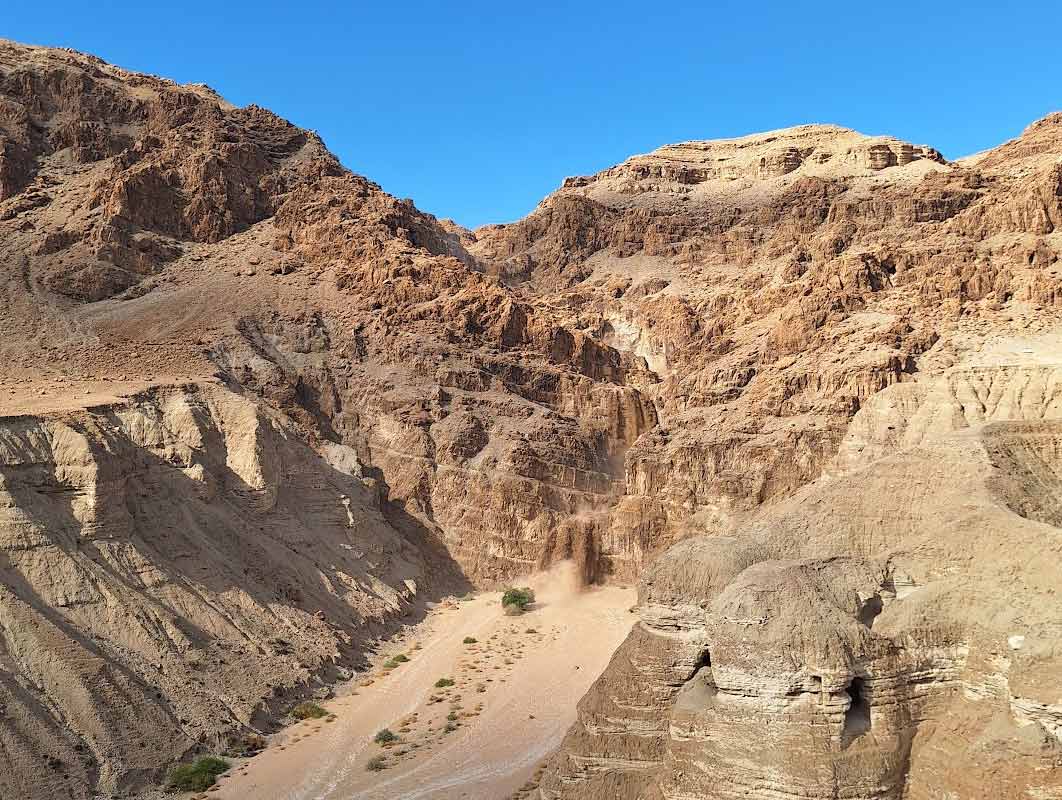
A short, partly accessible route with a big story. The Scrolls Trail blends desert views, wildflowers (in season), and a front-row seat to one of the most significant archaeological discoveries of the 20th century.

Along the Trail

  • Built in memory of archaeologist Hanan Eshel, a leading researcher of the Second Temple period and the Qumran caves
  • The trail links a series of viewpoints with information panels on the discoveries made here.
  • Sweeping views of the Dead Sea, with sightlines towards three of Qumran’s best-known caves — Caves 1, 2 and 11, where the Dead Sea Scrolls were found. Written by ”Ha’Yahad Community” in the 2nd century BCE, the scrolls offer a rare glimpse into the beliefs and daily life of the Second Temple era.

Nature Highlights (in season)

You may catch bright, fragrant desert blooms, including the vivid orange three-veined fleabane and colourful flax that splash the desert with carpets of colour.

Route Snapshot

Mostly flat and easy-going, with a few stepped sections. Ideal for families, casual walkers, and anyone who wants to learn about the Qumran story without a full-on hike.

Look After the Landscape

  • Entering the caves is strictly forbidden— they are dangerous and are also bat habitats.
  • Stay on the marked trail; do not climb the cliffs.
  • Best light (and views): morning or late afternoon
תיירות קליה

Nahal Darga (Wadi Darga)

This is the serious one. Nahal Darga is among the Judean Desert’s most challenging and spectacular canyons. Descending from the Hebron Hills to the Dead Sea, the trail includes a full day of narrow crevices, a series of rock steps, deep pools that fill after flash-floods and true wilderness energy.

The Wadi at a Glance

  • Upper section: wider, relatively open channels
  • Middle section (Mashash–Murabba’at): a short dramatic canyon with deep pools and shelter caves dating to the Bar Kokhba Revolt.
  • Lower section: the famous deep canyon — a twisting, narrow maze dropping over 500 metres down towards the Dead Sea

Recommended For

Experienced hikers only. You’ll need ropes, and sometimes abseiling equipment. The route is descent-only and includes narrow crevices, deep pools and rocky ledges. After strong flash floods, some sections may require swimming.

Safety & Regulations

  • Registration is required at the entrance at Mitzokei Dragot and you must present suitable equipment.
  • Always check the weather forecast and flash-flood warnings before you set off.
  • Plan times carefully — this route has a habit of catching hikers out after dark
  • In an emergency, the responding rescue unit is Megillot Rescue

Best Time to Visit

Best tackled in the cooler months. Summer heat can be unforgiving, and the risk level climbs fast. After floods, the canyon is at its most spectacular — but only go once conditions are confirmed to be fully safe.

תיירות קליה

Qumran National Park

An accessible, low-effort walk with high-impact history. This short route (approximately 1.5 km) takes you through the remains of the ancient settlement and the caves where the Dead Sea Scrolls were discovered. Parts of the route are accessible, making it a great choice if you want a relaxed introduction to the archaeology — and a window into the world of the Essene sect — a community traditionally associated with Qumran.

Good to Know

  • Partly accessible
  • Best seasons: autumn, winter and spring
  • Start from the National Park car park; allow around two hours on-site

Craving a bit more adrenaline??

Nahal Qumran Abseiling Route

A guided abseiling day with five descents down dry waterfalls of varying heights. Suitable for beginners with professional supervision and proper equipment (provided on a guided trip).

Nahal Qumran Hiking Route

A tougher option, taking you right into the wadi itself with a steep climb, boulder sections, and pools. A linear route of approximately 11 km is also available, usually taking 2.5–5 hours, depending, of course, on pace and conditions. Best in winter/spring — and only after flood conditions have fully cleared. In hot weather, it’s best to give this one a miss.

Local Tour Tips

Check the weather forecast and flash-flood warnings before setting out, especially for wadi routes. Bring water, a hat, closed shoes, and food. The National Park path has accessible sections; the wadi and abseiling routes do not.

The Baptism Site (Qasr al-Yahud)

Quiet, simple, and unexpectedly powerful. Qasr al-Yahud sits on the banks of the Jordan River — a small place with a huge footprint in Jewish and Christian tradition. At first glance, it’s unassuming, but the stories tied to this stretch of water shaped generations of faith. It feels like stepping into a story where time seems to layer itself around you, and the river seems to carry centuries in its current.

Why It Matters

The story begins in the days of Joshua Ben Nun. According to the Bible, this is where the Israelites crossed the Jordan after forty years of wandering in the desert. The river’s waters stopped in their tracks — a miracle — and the crossing became a defining moment: the instant when a nomadic tribe transformed into a nation settled in its own land. A threshold between one era and the next, one identity and another.

This is also where Elijah’s dramatic ascent takes place: the prophet is taken to heaven in a chariot of fire, leaving Elisha as his successor. In Elisha’s time, the Jordan takes on another dimension of meaning. One of the best-known stories tells of Naaman, commander of the Aramean army, afflicted with leprosy and healed after immersing himself seven times in the river’s waters. From then on, the Jordan is perceived as a place of cleansing and renewal.

Qasr al-Yahud is where water, faith, and ancient memory meet. Many visitors often sense time doubling back on itself — layers of history rising to the surface, with every bend of the river carrying a different chapter of the distant past.

Nahal David (Ein Gedi)

Please note: the Nahal David Reserve at Ein Gedi is currently closed for restoration following flash flood damage. Check the Israel Nature & Parks Authority website before you set off for the latest reopening updates.

When open, Nahal David is one of the Judean Desert’s true showstoppers: a living, breathing wadi threaded with water all year round, tucked between Mount Tzruya and Mount Yishai.

In the middle of a harsh, sunbaked landscape, you’ll find natural pools, small waterfalls, dramatic cliff scenery, and the unmistakable Dead Sea shimmering just below. Keep an eye out for ibex and rock hyraxes along the trail.

There’s also a biblical echo here: tradition says King David hid in this very wadi while fleeing from Saul. Here, the altitude shift is dramatic — from the top of the Dead Sea escarpment (approximately 200 metres above sea level) down to the lower reserve (approximately 400 metres below).

What Keeps This Oasis Alive?

The magic comes from two fresh springs, Ein Gedi and Ein Shulamit. Rainwater seeps deep into the ground, collects above an impermeable layer (an aquiclude), and accumulates there as a large underground reservoir. The water then finds its way out through natural cracks created by tectonic movement and rock erosion.

As the springs flow through the escarpment, the water drops nearly 200 metres, creating a chain of pools and basins below. In Lower Nahal David, the water gathers into inviting pools that are often perfect for a quick dip in summer — and sometimes even in the cooler months.

In short: a rare infusion of year-round fresh water and extreme desert terrain — a combination that makes this place feel remarkably alive!

Nahal Bokek

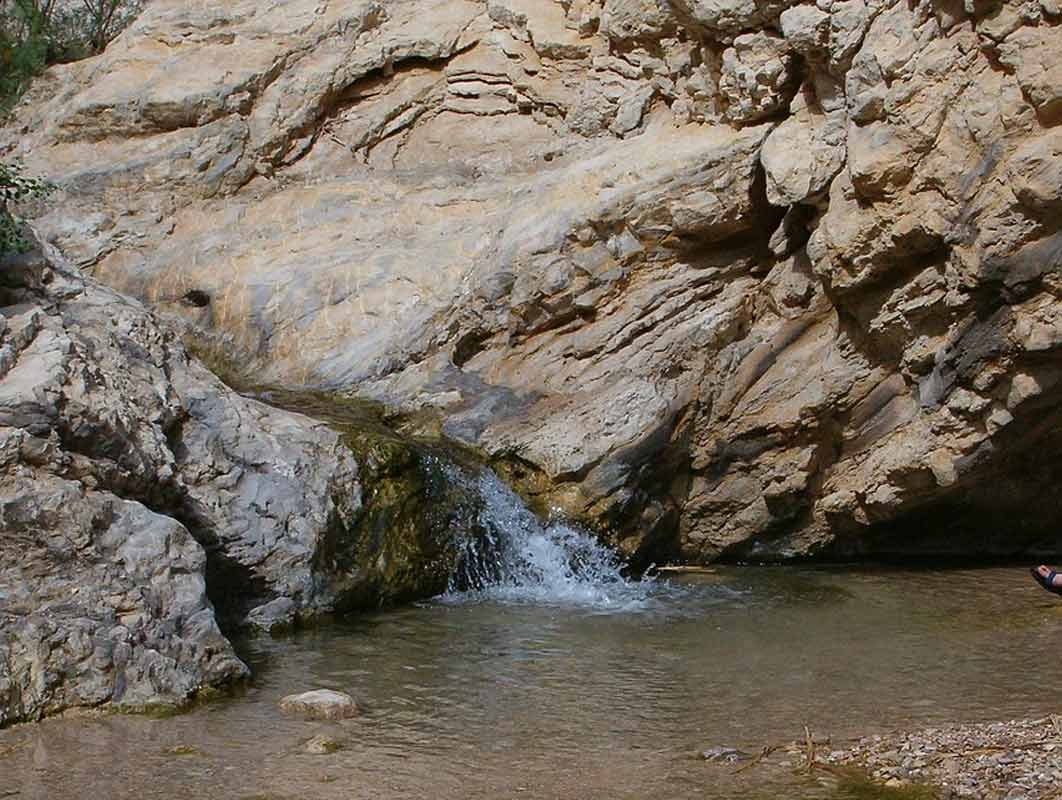
Nahal Bokek may be relatively short (about 15 km), but it has carved an impressively deep, beautiful canyon into the Dead Sea cliffs — and it is one of the most enjoyable short and splashy water adventures in the Judean Desert. Ein Bokek feeds the stream, creating shallow flowing water, natural pools and small waterfalls, with reeds and thick riverbank greenery adding shade and that ”how is this in the desert?” feeling.

The Short Trail 

  • Free parking at the organised car park at the entrance
  • Follow the black-marked trail down the wadi
  • Walk alongside reeds, tamarisk and streamside plants
  • After a few hundred metres you’ll reach a small waterfall — that’s the turning point, then return the same way

Good to Know:

Much of the walk is in shallow water, roughly knee-deep.

Getting There

From the northern roundabout in the Dead Sea hotel area, turn west, pass the petrol station, and continue to the organised car park. From there, follow the marked path which descends to the start of the trail.

Masada

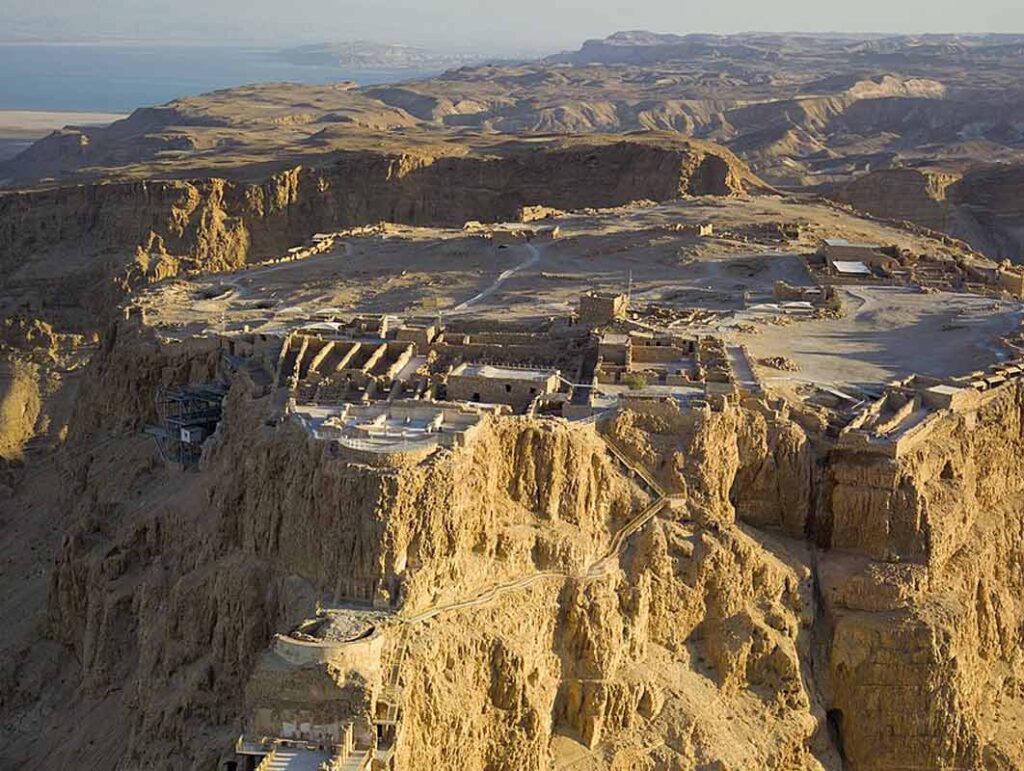
Masada isn’t just a landmark — it’s a legend. Perched above the Dead Sea, this fortress is woven into the story of the Great Revolt and the dramatic choice of choosing freedom over slavery. What began as a Hasmonean fortress became Herod’s desert palace, and later became the final refuge of the Zealots — and today it still stands as a symbol of resilience, courage, and Jewish spirit.

And the views? Absolutely unreal. Visit at sunrise, well worth the early start — the experience speaks for itself! 

Choose Your Ascent

Your Masada experience starts with how you choose to reach the top.  Tackle the Snake Path, take the easier Ramp, or hop on the cable car for a quick, scenic ride. Once you’re on top, exploring is easy to moderate and suitable for families. You can keep your visit brief or spend longer exploring; it’s entirely up to you. For the most comfortable weather, aim for spring or autumn.

Highlights

Beyond the stunning views, Masada is home to remains from Herod’s era and the later rebel stronghold: explore the palaces, storerooms, bathhouse, water cisterns, and the remarkably well-preserved Roman siege system still surrounding the mountain.

Over time, Masada became a symbol of freedom and resilience. Before Israel’s establishment it was a pilgrimage destination for youth movements and the Palmach — and today it still draws hikers, families, and groups, year-round.

Tip

Start your visit early, especially during the hot summer months.

The Good Samaritan Museum

This is one of those places that quietly surprises you — small, tranquil, and genuinely fascinating. The Good Samaritan Museum is a compact journey through faith, culture and layered history, weaving together Samaritan, Jewish and Christian heritage through mosaics, stonework, and the story of an ancient desert route.

Despite the name, it isn’t a person. “The Good Samaritan” is from Christian tradition and captures a simple moral idea: helping someone without expecting anything in return. The museum stands on what was once a roadside inn for pilgrims travelling between Jerusalem and Jericho — in an era when long journeys were made on foot or by animal, long before modern roads and vehicles.

Active since the time of Herod, the site remained significant for nearly two thousand years. Today, it houses a rich archaeological collection spanning multiple eras.

Highlights

In the open courtyard you’ll find:

  • Byzantine-era columns
  • Remains of an ancient church
  • Stone carvings with cross symbols
  • Stone pedestals used for preaching
  • Ancient sarcophagi (coffins carved in stone, usually displayed above ground)
  • Water cisterns once used for washing and drinking

One standout feature is a synagogue mosaic floor brought from Gaza, considered an especially important historical find.

Explore Inside

The museum is home to additional artefacts — an ancient menorah, oil lamps, marble pillars and tables, murals, and more. Even the building is an exhibit in its own right, its architecture part of the story. Roman-style arches built from trapezoidal bricks that lock together, creating impressive architectural stability, often closed with a keystone, positioning the entire structure in place. Simple engineering, brilliantly effective.

Location & Access

The museum is located near Kfar Adumim, on the Jerusalem–Dead Sea route (approximately 20 minutes from Jerusalem). Operated by the Israel Nature & Parks Authority, it is also open on Saturdays, entry fee applies.

A visit here feels like a small step back in time, a connection to stories, traditions, and craftsmanship that have endured for thousands of years.

Ein Prat (Wadi Qelt)

Ein Prat is a genuine oasis moment — cool, green, and unexpectedly vibrant in the heart of the Judean Desert. The spring flows year-round, feeding Wadi Qelt and forming a chain of shallow natural pools that are especially great for families and children. Clear water, fish, and water plants create a striking contrast: dry desert outside, thriving water world within.

Nearby highlights

Along the stream, you will discover additional springs such as Ein Mabu’a and Palm Pool, plus huge boulders lining the stream like a rocky procession. On the hillside is the Bells Cave, once home to hermit monks, with the Faran Monastery above, founded by the monk Chariton. The cave can be reached via a short path.

Ein Prat is one of the most popular reserves in the central region, largely because the water is so accessible — and the pools are generally safe for a refreshing dip. One quiet clue to just how clean it is: the river bladdersnail, a tiny freshwater snail that survives only in clear, unpolluted water.

The spring has served people for centuries. The British used the main pool as a drinking water source, and long before, the Romans built aqueducts to channel the water all the way to Herod’s palaces. Archaeological remains found on-site point to very ancient settlement, and the area is even referenced in biblical tradition.

Good To Know

  • Entrance fee applies
  • From the upper car park, it’s an approximate 20-minute walk — bring water, a hat and sun cream
  • You can drive closer to the gate, but the road is narrow and often busy
  • Stay on marked paths, and keep dogs on a lead

Getting There

Search Waze or Google Maps for “Nahal Prat Reserve”. Inside the reserve, walk approximately 10–15 minutes west, passing multiple pools along the stream until you reach the spring itself.

Tip

Ein Prat is a refreshing, family-friendly escape — the perfect desert cooldown. Clear pools, shade, desert scenery, and plenty of places to splash around. For a deeper swim head to the Palm Pool opposite the entrance, it’s lifeguarded and noticeably deeper.

Deir Hajla Monastery

Deir Hajla is calm, beautiful, and wonderfully simple — a short circular walk of approximately 2 km with a surprising amount to see. The monastery is open daily from 08:00 to 20:00, free of charge, and modest dress is required.

Enjoy organised parking, a small restaurant, and even the option of hiring a picnic table. Enquiries: +972-2-9943038

Getting There

Drive on Road 1 towards the Dead Sea, continue north on Route 90, then take the second right turn following the clear signs to the monastery.

Why Visit?

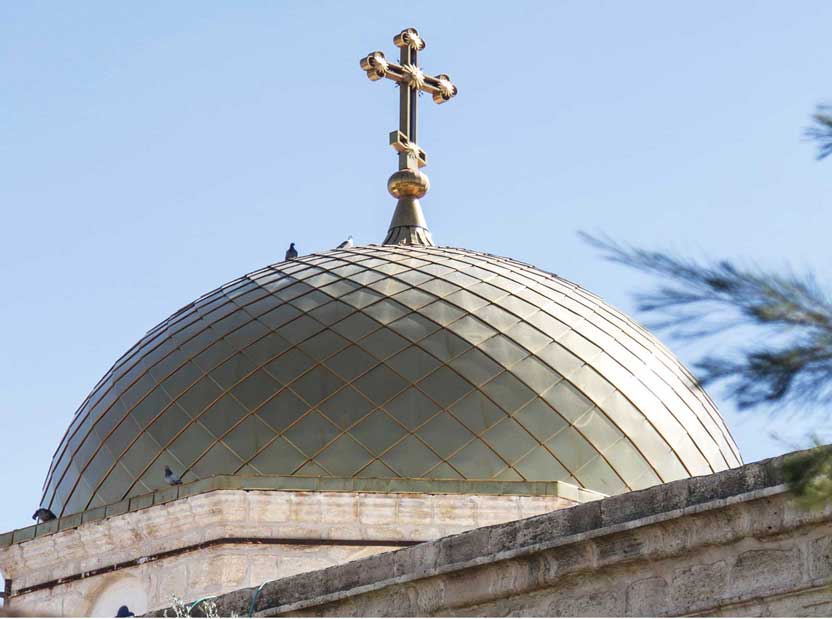
Deir Hajla Monastery is hard to miss; its silver dome rises from the desert like a landmark, and the green gardens around it create a striking contrast to the surrounding arid landscape. The site preserves the name of biblical Beit Hagla (an ancient place name from the Jericho Plain), linking the monastery to the area’s deep historical roots

Founded in the 5th century, the monastery is closely associated with Saint Gerasimus, known for the famous tale of his compassion and his friendship with a wounded lion.

Inside you’ll find an inner courtyard, an ancient crypt, and distinctive wall paintings — including a rare scene of Mary nursing Jesus. Glass cabinets display remains of monks killed during the Persian invasion and later disasters, adding a sobering, human layer to the visit.